
Low-GI Basmati Rice
Rice is the centre of the Indian plate, and it is not going anywhere. hlth low-GI basmati is aged long-grain basmati grown by multi-generation farming families in Punjab and Haryana, milled slow and sold in four grades — so you can pick the one that fits your table without giving up rice.
Basmati is naturally higher in amylose than many everyday milling varieties, and ageing firms up the starch further. Both factors slow how quickly the grain is digested. That is the whole of the claim: a more gradual glucose release from a portion of rice — not a health cure.
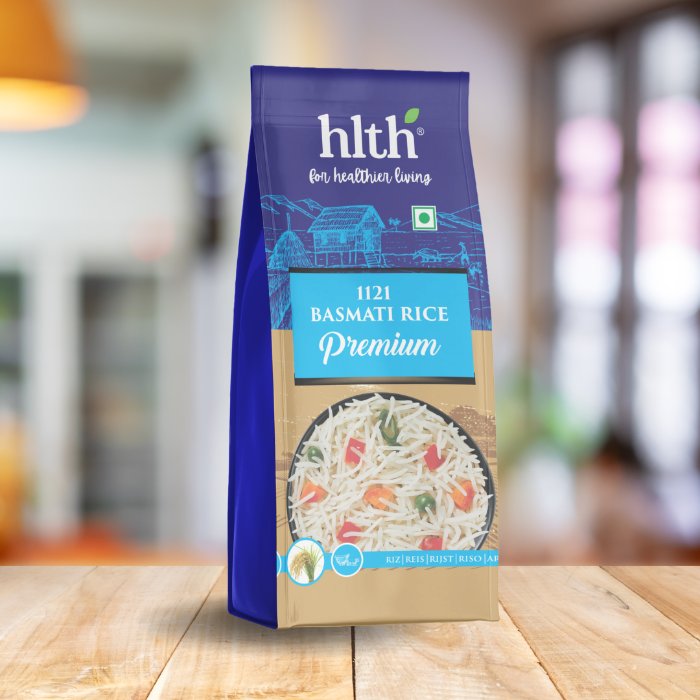
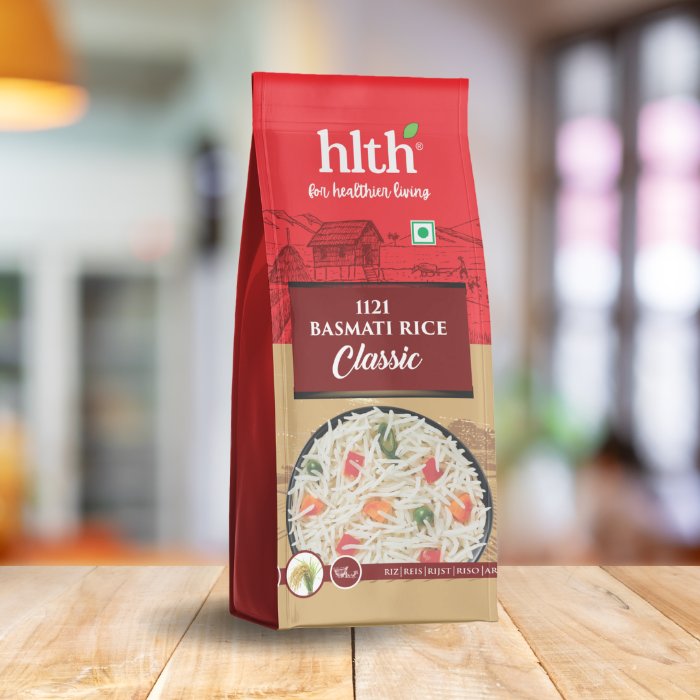
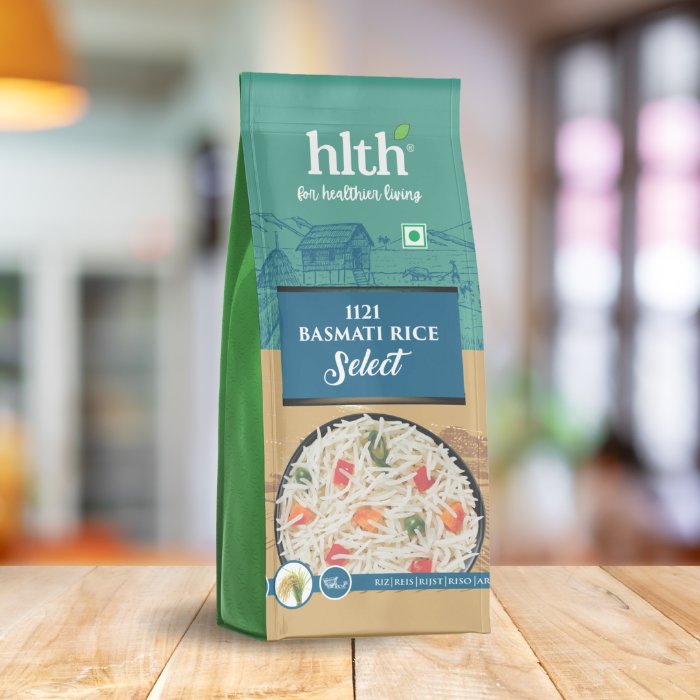
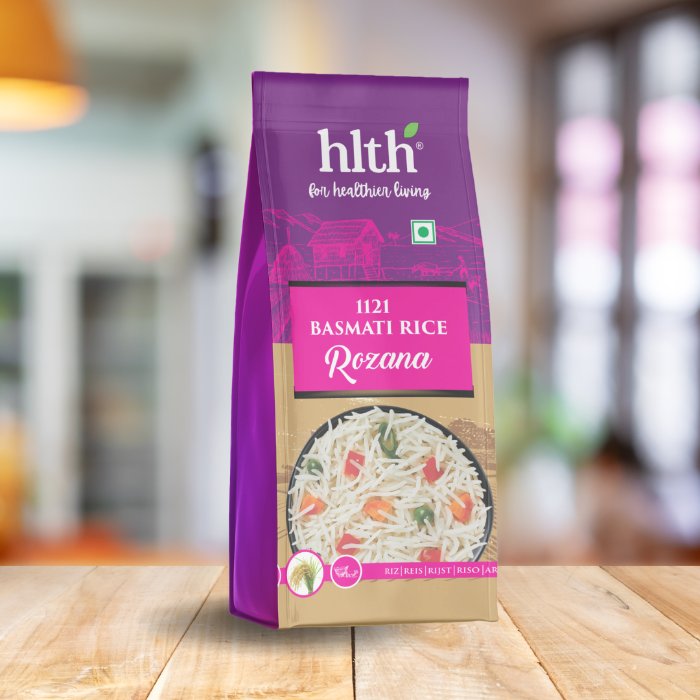
GI values shown are representative published figures for aged low-GI basmati varieties. Product-specific glycaemic index testing is under way and the final verified figures will be printed on the pack. GI below 55 is classified low.
What "low GI" actually means
The glycaemic index ranks how quickly a carbohydrate-containing food raises blood glucose compared with a reference food, measured over a portion containing 50 g of digestible carbohydrate. On the 0–100 scale, 55 or below is classified low, 56–69 medium, 70 or above high. Many plain white rices sit in the higher band.
GI measures the speed and shape of the glucose response. It is not a measure of how nutritious a food is, and a lower GI does not make a food a treatment for anything. Read it as one useful data point, not a health claim.
Four grades, one standard
- Premium — 24-month aged, extra-long 8.3+ mm grain. For biryanis and occasions.
- Classic — 18-month aged, rich aroma. The everyday all-rounder.
- Select — 12-month aged. Low GI without the premium shelf price.
- Rozana — 12-month aged, family value pack. Everyday cooking at scale.
How to get the most from it
- Pair rice with dal, sabzi, curd and a little ghee — fibre, fat and protein all slow the digestion of the whole meal.
- Serve a sensible portion rather than a heaped plate. Portion size affects the glucose response more than GI alone.
- Let cooked rice cool slightly, as with leftovers or rice salad — some resistant starch forms, which behaves more like fibre.
Who grows it
Aged basmati from multi-generation grower families across Punjab and Haryana, bought directly at above-mandi rates and milled slow. The growing region is named on every pack.